(852) 5729 0686



Early Screening & Preventive Defense for Women: Ovarian conditions are often termed “silent killers” due to subtle early symptoms that mimic digestive issues. Persistent symptoms including bloating, pelvic pain, early satiety, and urinary or bowel changes lasting over two weeks require immediate medical evaluation. Regular gynecological checkups combined with high-purity Fucoidan supplementation offer a robust defense for women’s health.
🌸 4 Hidden Warning Signs & Defense Mechanisms
🛡️ Target Audience & When to Seek Medical Care
Ideal for women experiencing persistent gastrointestinal/pelvic symptoms, mature/post-menopausal women, busy individuals under high stress, and proactive health maintenance groups. Seek medical care immediately if symptoms persist over 2 weeks, or in cases of post-menopausal bleeding or unexplained weight loss.
💡 Screening & Supplementation Advice
- Precise Screening: Pap smears do NOT detect ovarian issues. Undergo pelvic ultrasound, pelvic exam, and CA-125 blood tests for comprehensive evaluation.
- Supplement Choice: Opt for high-purity, multi-complex Fucoidan (combining Mekabu, Mozuku, and Fucus) for daily nutritional and immune support during standard care routines.
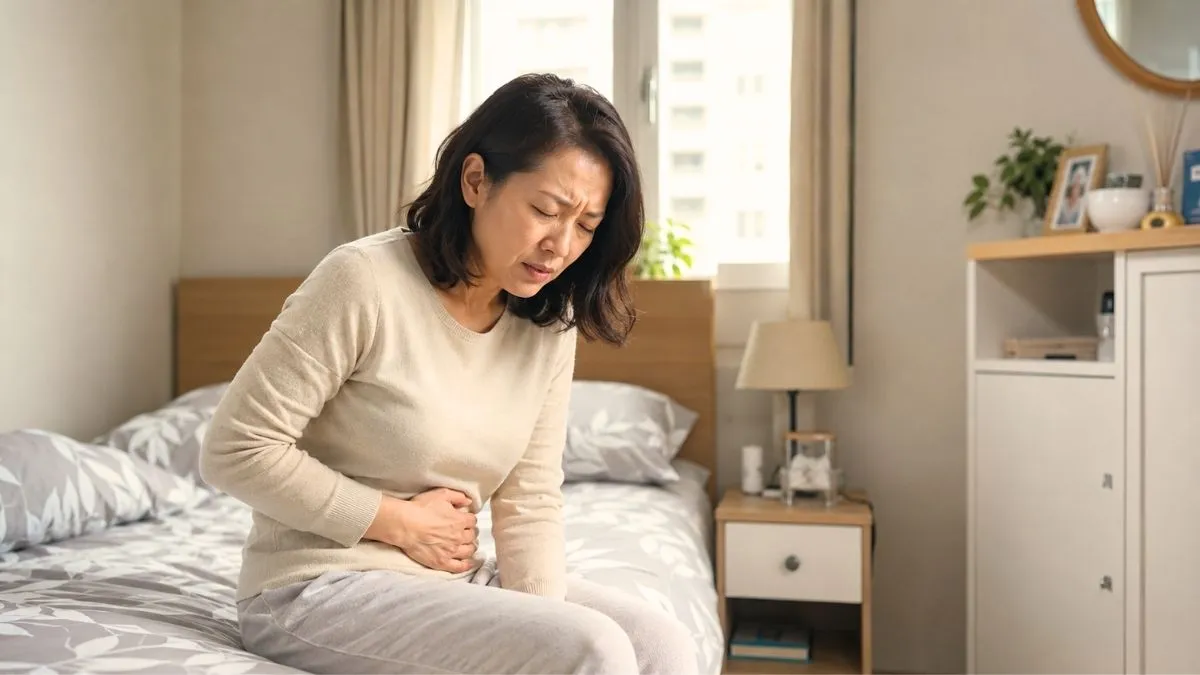
In Hong Kong, threats to women’s reproductive health (such as ovarian and uterine issues) have shown a trend toward younger demographics in recent years. Among them, ovarian disease is often referred to as a “silent killer.”
Because the ovaries are located deep within the pelvic cavity, early stages may not present obvious symptoms when abnormal cell changes occur. Even when many women experience persistent bloating or dull lower abdominal pain, they often mistake it for indigestion, middle-age weight gain, or common Premenstrual Syndrome (PMS), thereby missing the golden window for early detection and intervention.
Is persistent bloating or lower abdominal pain related to ovarian issues?
The answer is yes, it is possible, but there is no need to panic excessively.
Persistent bloating itself is not exclusive to ovarian disease; many gastrointestinal and urinary tract problems present with similar symptoms. Therefore, the key to assessing your health is not the name of the symptom, but whether the symptom isnewly onset, frequently recurring, and persists for more than two weeks.
According to guidelines from the U.S. Centers for Disease Control and Prevention (CDC), common early warning signs of abnormal ovarian and gynecological cells include: persistent bloating, feeling full quickly, difficulty eating, abdominal or back pain, pelvic pressure, frequent urination, and constipation [1]. If symptoms persist, do not treat them as ordinary gastrointestinal issues on your own, and seek professional medical evaluation early.
What are the common symptoms of ovarian disease? 4 body warning signs to watch closely
We understand that women always put family and career first, often unintentionally neglecting their own health. However, if your body sends these 4 signals, please stop and take good care of yourself:
| Silent Warning Sign | Common Symptoms & Physical Sensations | Potential Underlying Issue |
| Persistent Bloating & Early Satiety | Unexplained abdominal swelling, tighter waistline; feeling full or nauseous after eating very little. Symptoms persist for more than 2–3 weeks with no improvement from GI medication. | Abnormal pelvic microenvironment or fluid accumulation (ascites) exerting pressure on the stomach. |
| Pelvic / Lower Abdominal Dull Pain | Continuous feeling of heaviness or dull pain in the pelvic cavity or lower abdomen during “non-menstrual” periods, occasionally extending to the lower back. | Gradual enlargement of abnormal tissue pressing on or pulling surrounding nerves. |
| Abnormal Bleeding or Discharge | Bleeding between periods, post-coital bleeding, or bleeding after menopause; cloudy discharge with blood streaks or foul odor. | Direct warning signs of abnormal endometrial or cervical changes. |
| Frequent Urination or Bowel Changes | Frequent urgent need to urinate without a UTI; or persistent constipation and difficulty passing stool. | Enlarging abnormal pelvic mass pressing forward on the bladder or backward on the rectum. |
When should you see a doctor immediately? A guide to seeking gynecological medical care
If the above symptoms persist for more than two weeks, it is recommended to schedule a detailed checkup with a family doctor or gynecologist. In particular, do not adopt a “wait and endure” attitude if the following conditions occur:
– Any vaginal bleeding after menopause;
– Recurrent bleeding between periods or after sexual intercourse;
– Bloating accompanied by loss of appetite and unexplained weight loss;
– Persistent or worsening pelvic, lower abdominal, or back pain;
– Symptoms that severely interfere with daily eating, sleeping, or working.
⚠️ Warm Reminder (Medical Emergency):
If you experience heavy bleeding, dizziness/fainting, sudden severe abdominal pain, persistent vomiting, high fever, or suspected pregnancy with abdominal pain and bleeding, please seek immediate emergency care at a hospital.
🩺 Diagnostic Procedure:
Doctors will generally first evaluate the frequency of symptom onset, its relationship with the menstrual cycle, personal medical history, and family medical history. Depending on the situation, they may arrange a pelvic exam, ultrasound examination, blood tests (such as CA-125), or specialist referrals.

Gynecology Care & Immune Regulation: Scientific Research Mechanisms of Fucoidan
In addition to routine medical checkups and treatments, modern medical research continues to explore the potential of natural dietary supplements in maintaining immune health and providing long-term nutritional support. According to research published in Marine Drugs and various authoritative medical journals, Fucoidan, extracted from brown seaweed, has received widespread attention in female reproductive health and cellular maintenance [2]:
Cellular Metabolism & Apoptosis Mechanism: Laboratory studies demonstrate that Fucoidan can interfere with survival signals of abnormal cells, helping to activate the body’s Caspase protease mechanism (a key enzyme in natural cell metabolism) and promoting the apoptosis of abnormal cells.
Maintaining Healthy Microvascular Environment: Studies indicate that Fucoidan helps regulate Vascular Endothelial Growth Factor (VEGF) in the body, contributing to normal microvascular permeability and a healthy microenvironment.
Modulating Immune Function & Nutritional Support During Therapy: With its rich polysaccharide structure, Fucoidan can enhance the activity of Natural Killer (NK) cells and macrophages. Used as a nutritional supplement during conventional therapy, it offers synergistic support to help maintain normal cell function.
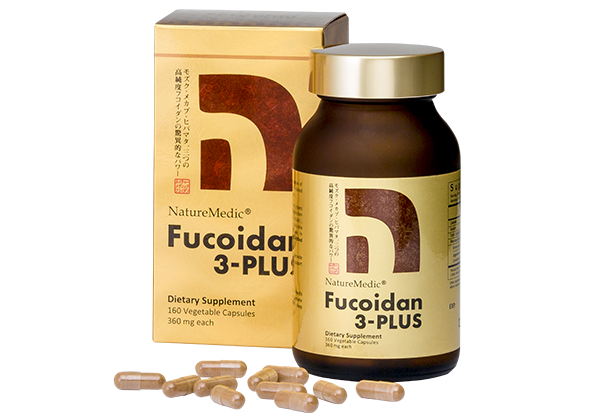
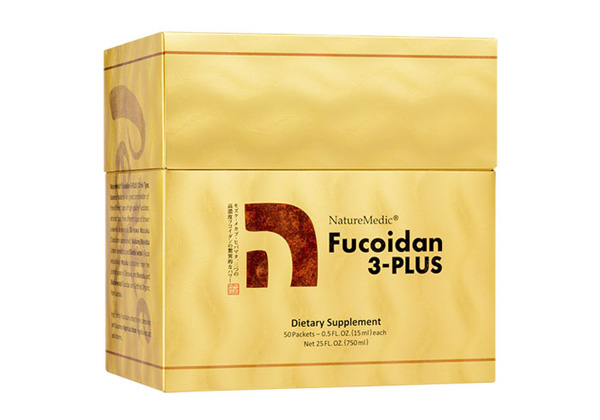
(Note: “NatureMedic Fucoidan 3-PLUS”, a premium Japanese Fucoidan brand, reminds readers that Fucoidan is a natural dietary supplement designed to provide daily nutritional support and maintain physiological functions. It cannot replace formal medical diagnosis, prevention, or treatment.)

Frequently Asked Questions (FAQ) About Ovarian disease Symptoms & Prevention
Q1: Is persistent bloating definitely a sign of ovarian disease?
Not necessarily. Bloating is common in gastrointestinal dysfunction, hormonal fluctuations, or benign gynecological conditions (such as uterine fibroids). However, if bloating lasts for more than two weeks and is accompanied by early satiety or pelvic pain, a gynecological ultrasound is recommended.
Q2: Are there no symptoms in early-stage ovarian disease?
Not necessarily. Early-stage ovarian disease is not completely asymptomatic; rather, its symptoms are vague and mimic gastrointestinal discomfort, making them easy to overlook. Because the ovaries are deep within the pelvic cavity, early changes usually do not cause severe pain. However, as the condition progresses slightly and presses against adjacent organs, subtle warning signs will emerge.
Q3: Do I need to see a doctor for non-menstrual bleeding?
Yes. Non-menstrual bleeding requires a doctor’s evaluation, especially when the bleeding is heavy, lasts over three days, is accompanied by abdominal pain, occurs after intercourse, or occurs after menopause. If it is only a tiny amount of pink or brown spotting during ovulation lasting a day or two, it is usually normal and can be observed first.
Q4: Can a Pap smear check for ovarian disease?
No. A Pap smear primarily collects cells from the surface of the cervix to check for abnormal cervical cells or prediseaseous lesions. It cannot visualize or diagnose ovarian structures and diseases. To evaluate the ovaries, a pelvic exam, pelvic/transvaginal ultrasound, and blood tests (such as CA-125) are required.
Q5: Does frequent urination or constipation mean there is a pelvic problem?
Not necessarily. These symptoms are often caused by urinary tract infections, constipation, stress, or benign gynecological conditions (e.g., uterine fibroids, ovarian cysts). However, if an abnormal mass grows larger and presses against the bladder or rectum, frequent urination and constipation can occur. A pelvic ultrasound is advised for confirmation.
Conclusion: Trust Your Instincts, Take Charge of Your Health
Faced with vague bodily warning signs, many women tend to “endure it a bit longer,” but health cannot afford delays. Annual routine gynecological ultrasounds and Pap smears are the key to early detection. In daily health maintenance, balanced nutrition paired with timely natural dietary supplements (such as Fucoidan) can build a lasting and solid shield for your well-being.
Don’t let busyness be an excuse to ignore your body’s calls for help. Share this information with your family and friends today!
Caring for Yourself and Your Family Begins with Premium Nutritional Support
Discover how high-purity multi-complex Fucoidan (combining Mozuku, Mekabu, and Fucus) provides essential nutritional support for women’s physiological wellness. Request your free product sample and comprehensive health booklet today.
⚠️ Medical Disclaimer
The content of this article is for health information sharing and reference purposes only and cannot substitute for professional medical diagnosis and treatment. Always consult your attending physician or clinical dietitian regarding personal dietary adjustments, exercise plans, and supplement usage during recovery.
Authoritative Health Institutions & Peer-Reviewed Journal Citations: To ensure clinical accuracy and educational value, content on this page cites clinical research and guidelines published by the Centers for Disease Control and Prevention (CDC) and the international journal Marine Drugs[cite: 3].
1. Gynecologic Cancers: Early Warning Signs & Clinical Symptoms
Research Topic: Symptom classification and early clinical differentiation of gynecologic malignancies and ovarian abnormal cells[cite: 3].
Key Findings: Identifies persistent bloating, early satiety, pelvic pressure, frequent urination, and bowel changes as key early warning signs[cite: 3]. Recommends immediate medical consultation if symptoms persist for more than 2 weeks[cite: 3].
《Symptoms of Gynecologic Cancers》
2. A Decade of Research on Fucoidan Mechanisms & Anti-Tumor Support
Research Topic: Review of scientific literature on bioactive marine polysaccharide Fucoidan regarding cell apoptosis, microvascular modulation, and immune function[cite: 3].
Key Findings: Demonstrates Fucoidan’s capability to activate Caspase enzymes for natural apoptosis, modulate VEGF factors for healthy vascular microenvironments, and enhance NK cell and macrophage activity[cite: 3].
《Ten Years of Research on Fucoidan and Cancer》
🛡️ Medical Review & Scientific Compliance Declaration
All reference sources cited on this page are derived from international public health authorities (CDC) and peer-reviewed medical journals (Marine Drugs)[cite: 3]. This material is provided strictly for objective health education and does not replace professional medical diagnosis, advice, or treatment[cite: 3].